
2027 State of Design & Make Report
November 2026This year’s research arrives at a moment of extraordinary change. Artificial intelligence is reshaping how work gets done. Sustainability has become a business priority. Economic uncertainty, workforce shortages, and rising customer expectations are forcing organisations to rethink how they operate. The pace of change isn’t slowing, and neither are the demands on the people leading it.
Key insights from the report
AI imperatives meet implementation challenges
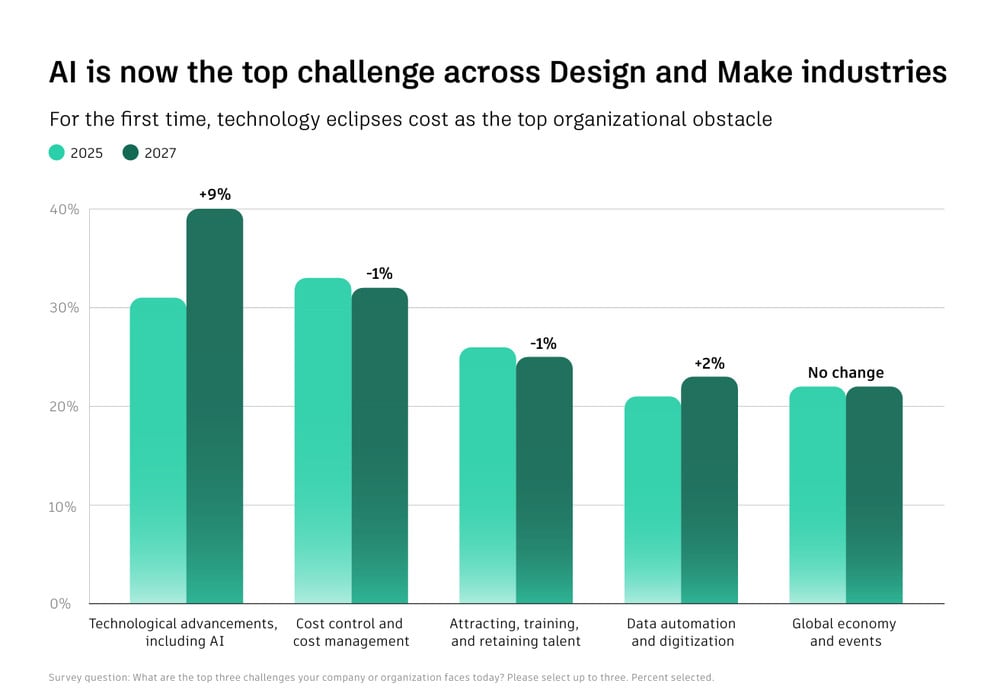
For the first time, technological advancement (including AI) has overtaken cost management as organisations’ top concern, rising from 31% in 2025 to 40% in 2027. The shift reflects more than growing interest in AI. It marks a change in executive priorities as organisations move from experimenting with AI to embedding it into everyday work. 75 % plan to increase AI investment over the next three years.
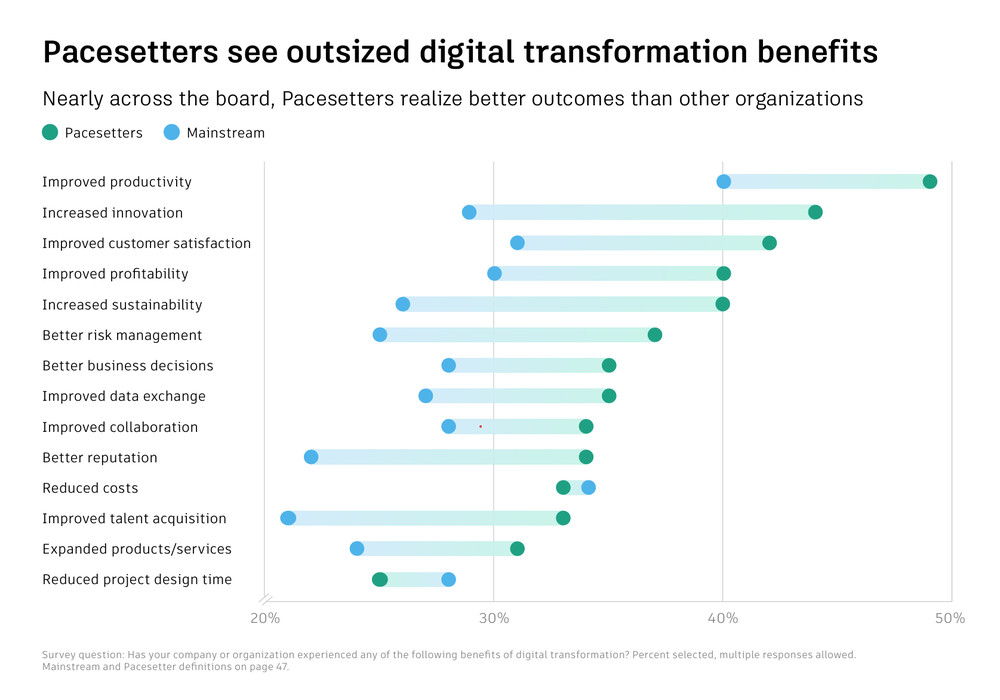
The difference between Pacesetters and mainstream organisations isn’t simply that they invest more in AI. Pacesetters are far more likely to have dedicated teams responsible for AI integration (94% vs. 61%), trusted data partners (92% vs. 65%), and connected systems that integrate information across the organisation (91% vs. 60%).
Sustainability shifts from aspiration to advantage
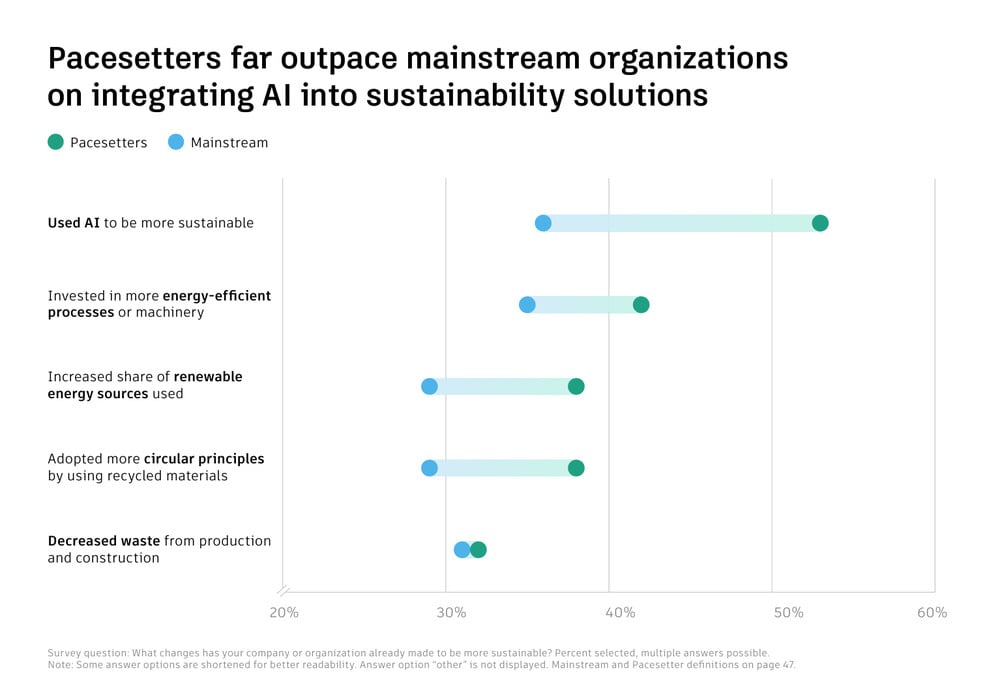
67% of organisations say sustainability creates a competitive advantage, while 71% believe sustainability initiatives can generate more than 5% of annual revenue over time. The question is no longer whether sustainability creates value. Increasingly, organisations are focused on how to capture that value through better decisions, stronger operations, and connected digital capabilities.
Pacesetters are more likely to see sustainability as a competitive advantage than mainstream organisations (92% vs. 64%). They don’t simply invest more in sustainability. They build the organisational capabilities necessary to make sustainability part of everyday business decisions.
Convergence is key for resilient organisations
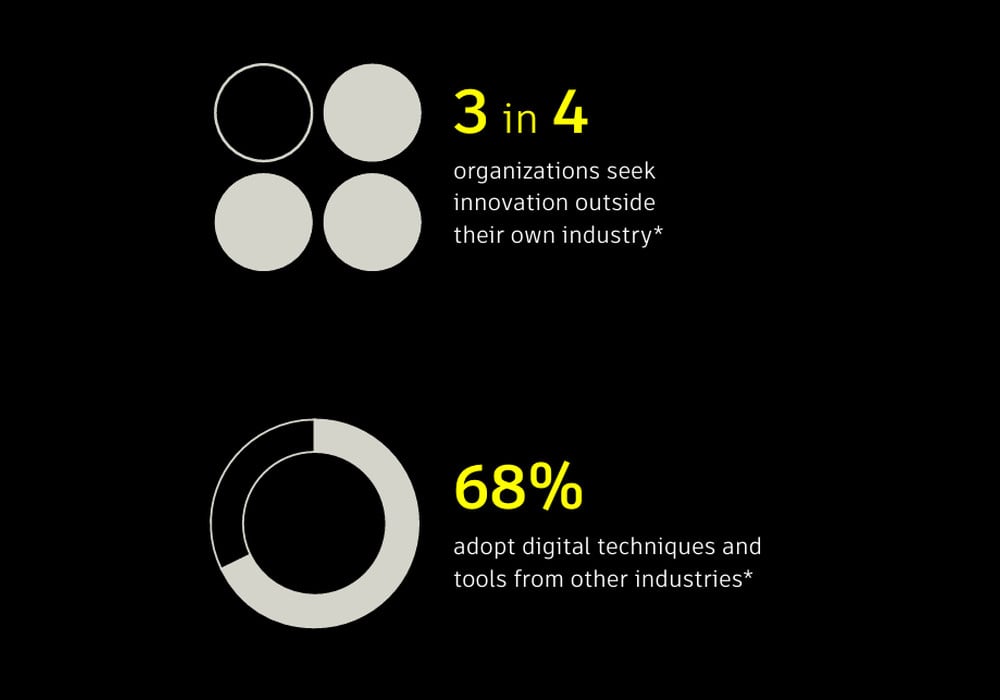
Organisations are increasingly solving problems that extend beyond a single discipline, workflow, or industry. Convergence creates value when organisations connect information, workflows, and expertise so knowledge moves more easily across teams, projects, and industries. Advances in AI, connected data, and cloud platforms are making those connections easier.
Compared with mainstream organisations, Pacesetters are far more likely to connect systems through APIs (91% vs. 60%) and assign ownership for internal data (93% vs. 66%).
Building organisations that can thrive through continuous change
The pattern across Design and Make industries is clear: Digital transformation creates the connected data, workflows, and operating foundation that organisations need to move faster. AI helps people make better decisions, automate routine work, and uncover new opportunities. Sustainability increasingly becomes the outcome of making smarter decisions across the business. Convergence strengthens each of these capabilities by connecting people, expertise, and information across teams, disciplines, and industries. These capabilities are most powerful when they reinforce one another.
Organisations create greater value when digital transformation, AI, and sustainability strengthen one another rather than operating as separate initiatives. The opportunity is no longer to transform once. It is to build organisations that can keep transforming.
About the State of Design & Make Report
The 2027 State of Design & Make report is Autodesk’s annual global study of the trends shaping how organisations design, make, and operate the built and manufactured world. This edition draws on responses from 5,500 leaders and experts across architecture, engineering, and construction (AEC); design and manufacturing (D&M); and media and entertainment (M&E), representing organisations of every size across 23 countries.
